



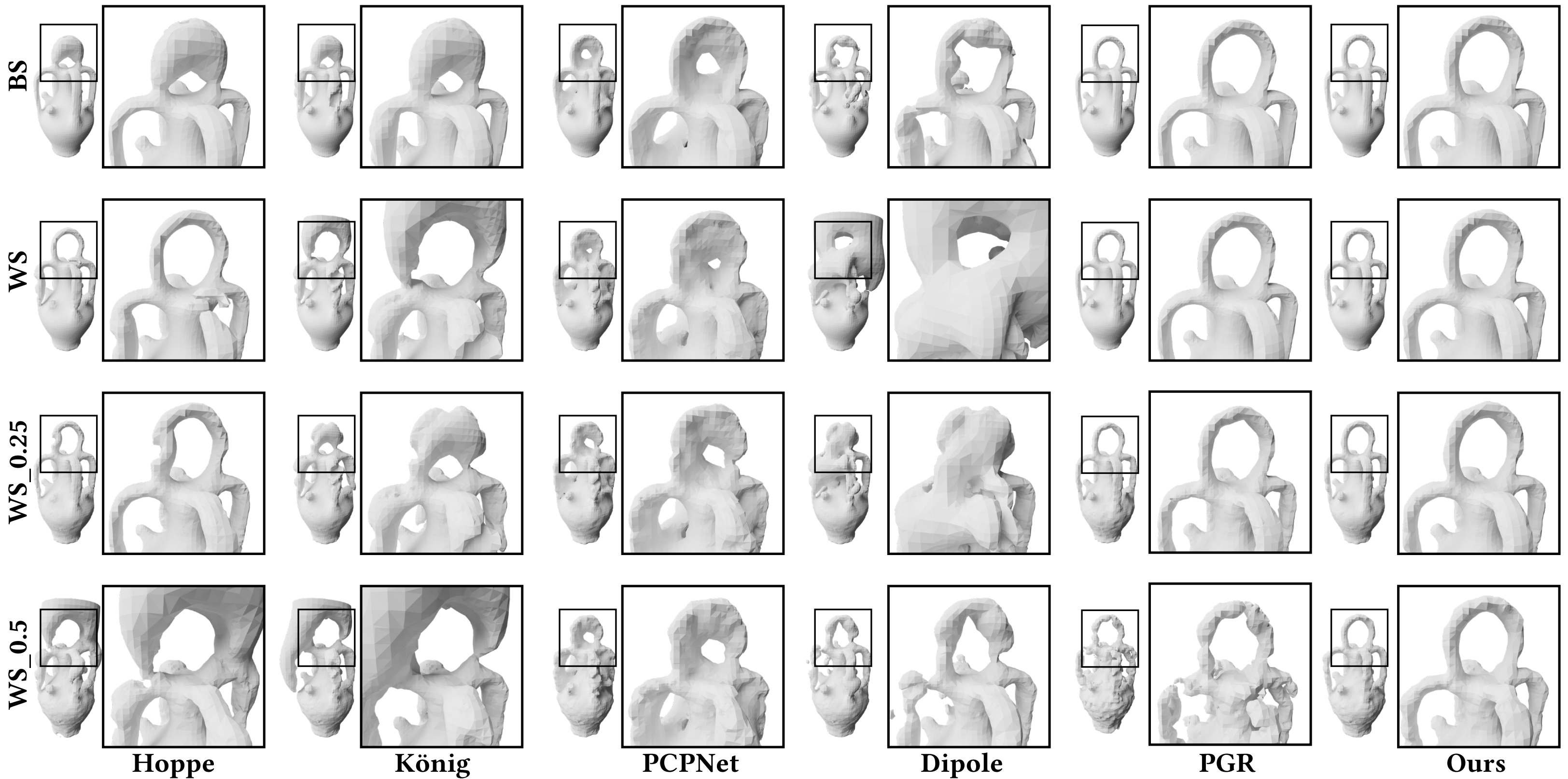
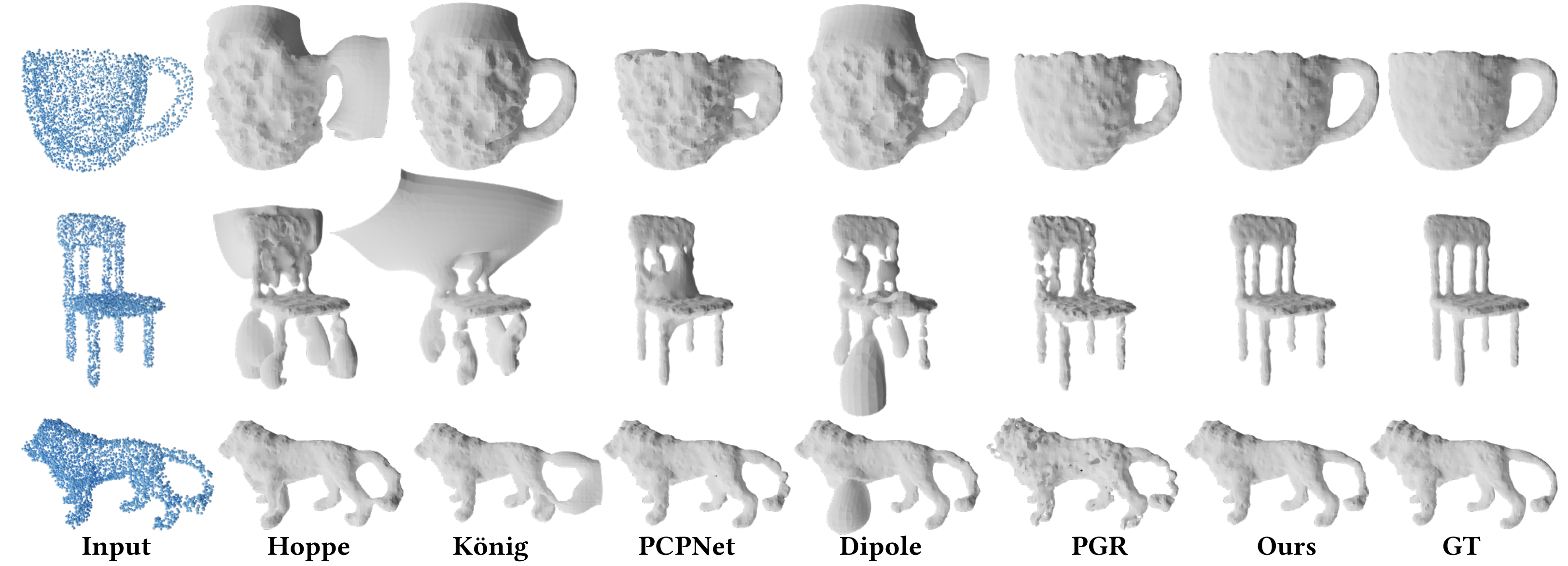
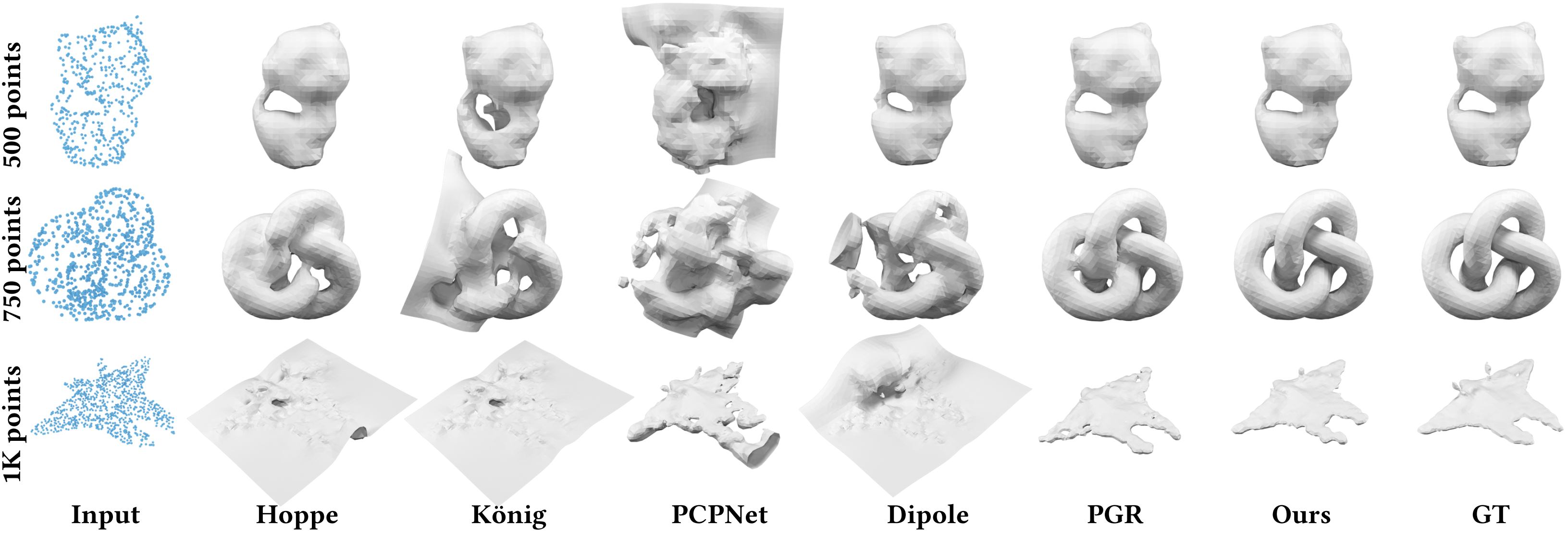
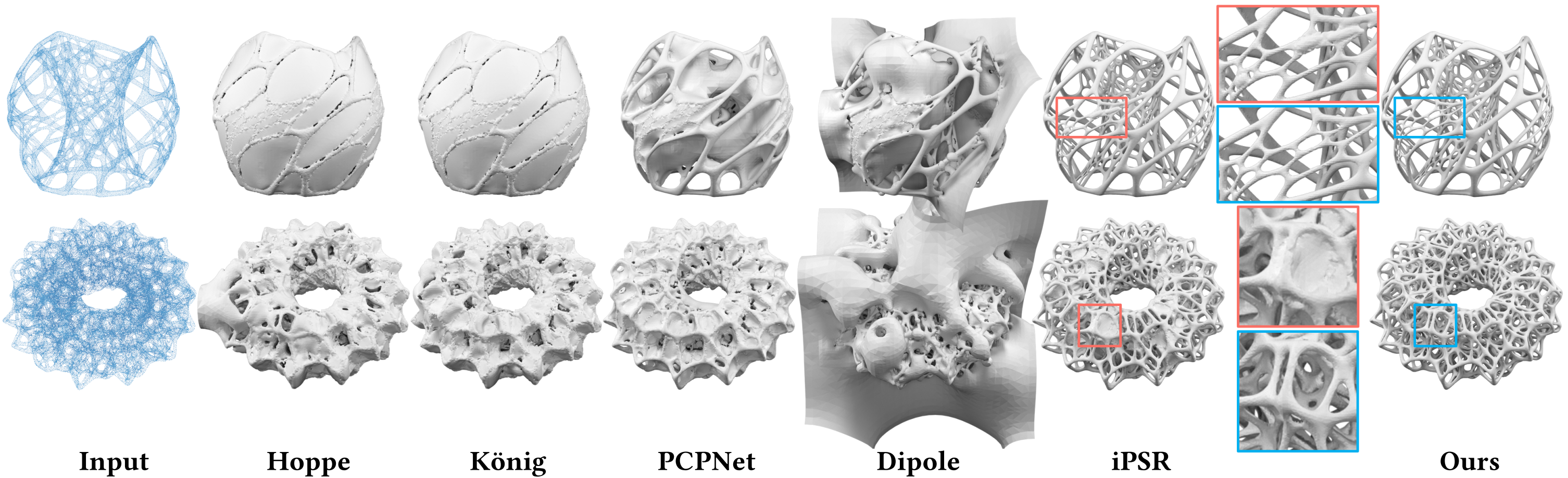
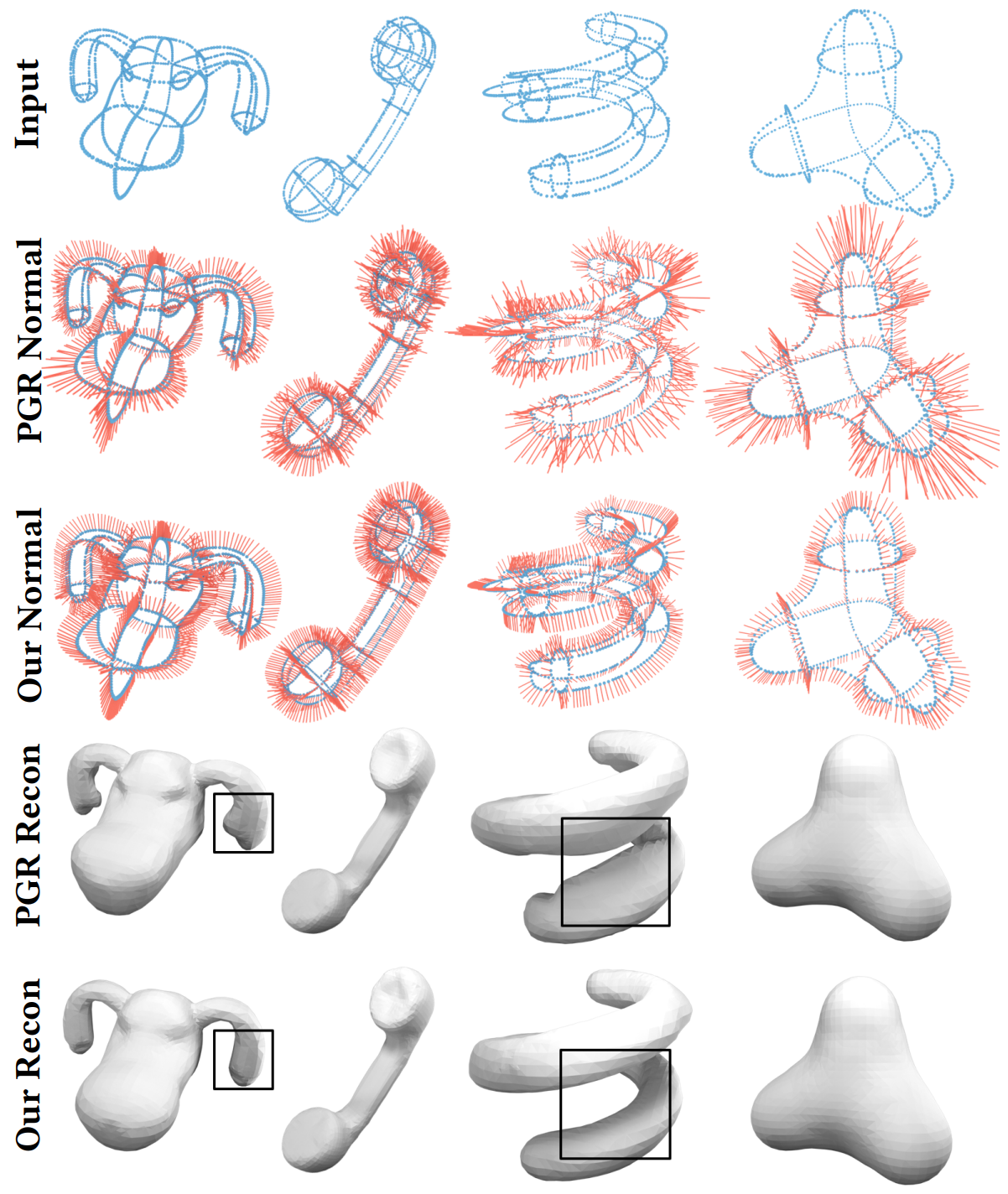
Estimating normals with globally consistent orientations for a raw point cloud has many downstream geometry processing applications. Despite tremendous efforts in the past decades, it remains challenging to deal with an unoriented point cloud with various imperfections, particularly in the presence of data sparsity coupled with nearby gaps or thin-walled structures. In this paper, we propose a smooth objective function to characterize the requirements of an acceptable winding-number field, which allows one to find the globally consistent normal orientations starting from a set of completely random normals. By taking the vertices of the Voronoi diagram of the point cloud as examination points, we consider the following three requirements: (1) the winding number is either 0 or 1, (2) the occurrences of 1 and the occurrences of 0 are balanced around the point cloud, and (3) the normals align with the outside Voronoi poles as much as possible. Extensive experimental results show that our method outperforms the existing approaches, especially in handling sparse and noisy point clouds, as well as shapes with complex geometry/topology.
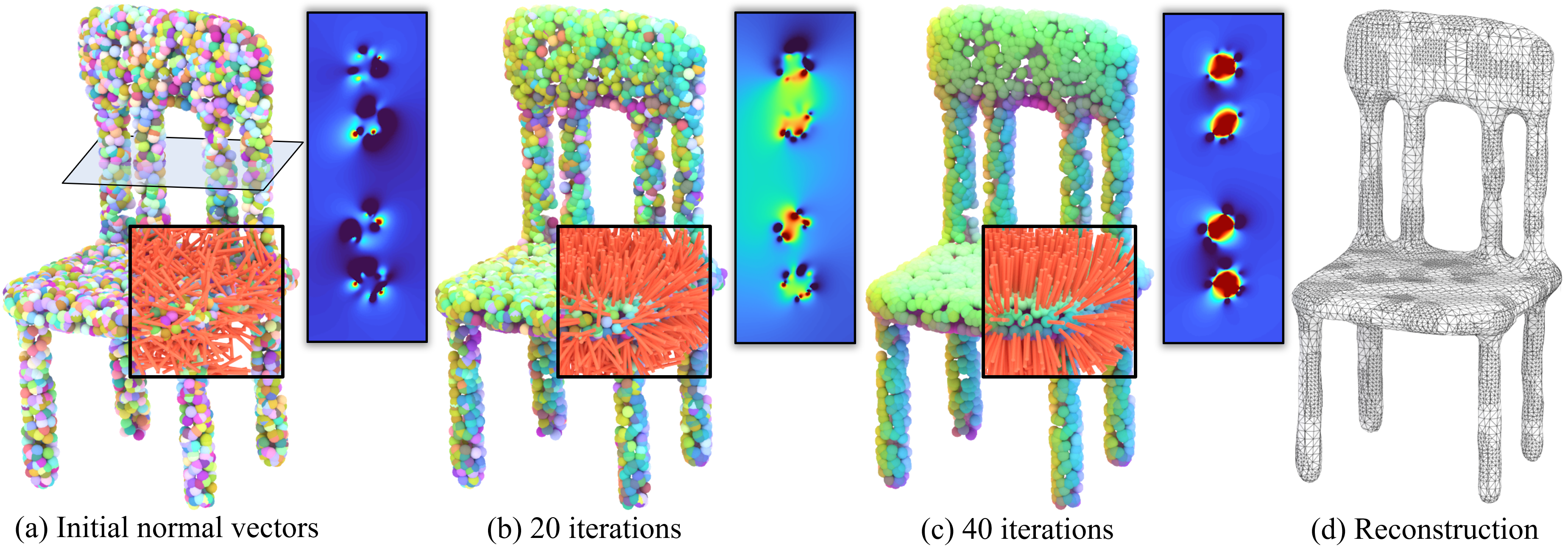
In recent years, the winding number, as a powerful tool for inside outside tests, has gained increasing attention in digital geometry processing, ranging from meshing to reconstruction. Despite the ability to distinguish the interior part (the winding number is close to 1) from the exterior part (the winding number is close to 0), it seriously depends on the support of reliable normals. Our hypothesis is that only when the normals are oriented with global consistency, the winding-number field could be approximately binary-valued with 1 and 0. This inspires us to optimize the normals such that the winding-number field becomes fully regularized.
In this paper, we propose an all-in-one functionality to characterize the requirements of a winding-number field from three aspects: (a) the winding number should be close to either 1 or 0 at any query point, (b) when the query points are scattered in the neighborhood of input samples p𝑖, the occurrences of 1 and the occurrences of 0 should be approximately balanced, and (c) the sample p𝑖’s normal vector should align well with the direction towards the outside Voronoi pole.
@article{Rui2023GCNO,
	author = {Xu, Rui and Dou, Zhiyang and Wang, Ningna and Xin, Shiqing and Chen, Shuangmin and Jiang, Mingyan and Guo, Xiaohu and Wang, Wenping and Tu, Changhe},
	title = {Globally Consistent Normal Orientation for Point Clouds by Regularizing the Winding-Number Field},
	year = {2023},
	issue_date = {August 2023},
	publisher = {Association for Computing Machinery},
	address = {New York, NY, USA},
	volume = {42},
	number = {4},
	issn = {0730-0301},
	url = {https://doi.org/10.1145/3592129},
	doi = {10.1145/3592129},
	journal = {ACM Trans. Graph.},
	month = {jul},
	articleno = {111},
	numpages = {15},
	keywords = {normal orientation, winding number, Voronoi diagram, optimization, raw point cloud}
}